
Thursday, July 30, 2009
Dancing the Tides
Poet Joshua Gage has written pieces inspired by my artwork before, this time he took my little drawing Drum Solo in Blue as a muse (and was kind enough to mention it). You can find his poem published in the Summer 2009 issue of Goblin Fruit: Raqs Sharqi. Enjoy some bellydance-themed verse :)

Monday, July 27, 2009
Preparing for the Faire
After approximately three years of taking classes, a handful of workshops, and a slew of bellydance DVD purchases later, I'm actually going to perform*.
Before the official start of last week's class there was a flurry of activity involving the experimental whirling of tiered black skirts, and the pairing of colorful fringe with bits of banjara textiles that glinted like disco balls in the light. It was a little dizzying to observe, but the giddy atmosphere aroused by the splay of costumery was infectious. I was almost immediately addressed as the only person who didn't provide an official response regarding the upcoming performance opportunity (that would explain the unusually intense fuss over tribal gear before class). I vaguely remembered receiving an e-mail about it but sheepishly declined, partially because I assumed that it was intended for students in higher class levels, but also because I instinctively feel that Desirée and performance do not belong in the same sentence.
The bulk of the class was essentially a rehearsal where we danced to the actual piece being used in the show, which is blessedly brief, practicing changing designated leaders at the appropriate spot in the music. It was so much fun that I was beginning to regret my knee-jerk initial denial. My teacher and a few of my classmates were trying to persuade me to reconsider. They had some good points: I don't have to lead, and the song is only about 2 and a half minutes long. It would also be a really good excuse to wear some of the nifty things I've accrued since my bellydance addiction began. By the end of class, I had succumbed to the peer pressure (it's not just for kids anymore!) and was added to the list for the Level II performance piece.
The performance will be at the Wrightstown Renaissance Faire as part of a line-up featuring other levels of dancers from Hipnosis' studio on the two days before my birthday, thankfully giving us some time to rehearse and pull together a costume.
I've been fitted for my banjara choli halter, and my fringe is in the mail. I'm going to attempt to make a belt from some of the supplies of coins, Turkman buttons, guls, and other goodies I've been hoarding. My hair and makeup are still up in the air, but I did get an awesome bindi and I would love to make and wear a nath, which is apparently the word for the chain that drapes from a nose ring around the side of the face and attaches to an earring, since I think this might be the only type of occasion where I could actually get away with wearing one!
Before the official start of last week's class there was a flurry of activity involving the experimental whirling of tiered black skirts, and the pairing of colorful fringe with bits of banjara textiles that glinted like disco balls in the light. It was a little dizzying to observe, but the giddy atmosphere aroused by the splay of costumery was infectious. I was almost immediately addressed as the only person who didn't provide an official response regarding the upcoming performance opportunity (that would explain the unusually intense fuss over tribal gear before class). I vaguely remembered receiving an e-mail about it but sheepishly declined, partially because I assumed that it was intended for students in higher class levels, but also because I instinctively feel that Desirée and performance do not belong in the same sentence.
The bulk of the class was essentially a rehearsal where we danced to the actual piece being used in the show, which is blessedly brief, practicing changing designated leaders at the appropriate spot in the music. It was so much fun that I was beginning to regret my knee-jerk initial denial. My teacher and a few of my classmates were trying to persuade me to reconsider. They had some good points: I don't have to lead, and the song is only about 2 and a half minutes long. It would also be a really good excuse to wear some of the nifty things I've accrued since my bellydance addiction began. By the end of class, I had succumbed to the peer pressure (it's not just for kids anymore!) and was added to the list for the Level II performance piece.
The performance will be at the Wrightstown Renaissance Faire as part of a line-up featuring other levels of dancers from Hipnosis' studio on the two days before my birthday, thankfully giving us some time to rehearse and pull together a costume.
I've been fitted for my banjara choli halter, and my fringe is in the mail. I'm going to attempt to make a belt from some of the supplies of coins, Turkman buttons, guls, and other goodies I've been hoarding. My hair and makeup are still up in the air, but I did get an awesome bindi and I would love to make and wear a nath, which is apparently the word for the chain that drapes from a nose ring around the side of the face and attaches to an earring, since I think this might be the only type of occasion where I could actually get away with wearing one!
* Technically, I did perform a short veil choreography with classmates at Casablanca, a Middle Eastern Restaurant in Warrington, when I first started taking classes, but it didn't feel like a real performance to me. Instead I felt more like a tutu-bedecked toddler at a dance recital being patronized by my parents and other onlookers for my endearing awkwardness and incoordination.
Tuesday, May 26, 2009
Spring 2009 Bellyjam & Zafira Workshops
It's been a few weeks since I attended Hipnosis' Spring 2009 Bellyjam and the Zafira workshops, and I need to get some thoughts down before I lose all recollection of them completely. Both the hafla and the workshops were held at the Elkins Estate, a sprawling property dotted with grandiose mansions in Elkins Park, PA. Entering through a tall wrought-iron gate and down an impressive driveway accented with statuary, you knew that this event was going to be special. The property was formerly owned and maintained by a convent of nuns, and the Bellyjam was held in a large room they had converted into a chapel complete with confessional booths at the rear. The stage was set on a slightly elevated portion of the room and was swathed in a lovely array of draped fabric, floor pillows, and lanterns.
The show opened with a performance by the band One combining doumbek, guitar and Indian tabla, and then the ladies of Hipnosis took the stage for two improvisational pieces. Following them were a series of soloists from the area. The ones I remember enjoying the most was a medley by a Cabaret-style dancer from New Jersey who took turns dancing with veil and zills, a tribal fusion solo to Amon Tobin's Easy Muffin by Laura Boyd, and an energetic Indian dance. Olivia and Maria from Zafira Dance Company performed twice, once immediately before the intermission and once at the very end of the show. After the intermission the student troupes performed and Vikki's Tribal Fusion class danced to the piece on which they had been working. As usual it was a great time. There were some vendors in the large foyer area and I purchased a hoop from one of them. I'm not doing very well with it, but the amount of time I can keep it turning (which isn't very long at all) is fun.
The Zafira workshops the following day (I was only able to attend the Sunday classes) were held in the same grand space as the Bellyjam. The first workshop focused on various types of shimmies (primarily 2/4, 3/4, and even 4/4 shimmies) and was taught by Maria Hamer. I wasn't sure I was going to survive Maria's pilates/yoga-inspired warm-up. It's not that she was a stern taskmaster (far from it actually! she was encouraging and comical throughout the entire process) but my abs and thighs were simply not prepared for that kind of work, and evidently there were many others in the workshop who weren't prepared for it either. After a break for lunch Olivia Kissel took over for a workshop focused on fluid movements and turns. I sensed a significant ballet influence in her teaching. Olivia also did a warm-up but it was of a completely different nature than Maria's: it consisted of a meditation technique called "bee's breath" which I thought was very unique and effective.
Unlike some other workshops I've attended, I really felt that Maria and Olivia were honestly welcoming of everyone who attended, despite the varying levels of skill and experience. They were also willing to be more spontaneous with the teaching material and respond to the desires and needs of the students rather than to stick staunchly to one specific plan. I would definitely say that although I was certainly in over my head with these workshops, I was left with a great deal to contemplate and I had a great time. I would not hesitate to take another set of workshops with them if given the opportunity.
The show opened with a performance by the band One combining doumbek, guitar and Indian tabla, and then the ladies of Hipnosis took the stage for two improvisational pieces. Following them were a series of soloists from the area. The ones I remember enjoying the most was a medley by a Cabaret-style dancer from New Jersey who took turns dancing with veil and zills, a tribal fusion solo to Amon Tobin's Easy Muffin by Laura Boyd, and an energetic Indian dance. Olivia and Maria from Zafira Dance Company performed twice, once immediately before the intermission and once at the very end of the show. After the intermission the student troupes performed and Vikki's Tribal Fusion class danced to the piece on which they had been working. As usual it was a great time. There were some vendors in the large foyer area and I purchased a hoop from one of them. I'm not doing very well with it, but the amount of time I can keep it turning (which isn't very long at all) is fun.
The Zafira workshops the following day (I was only able to attend the Sunday classes) were held in the same grand space as the Bellyjam. The first workshop focused on various types of shimmies (primarily 2/4, 3/4, and even 4/4 shimmies) and was taught by Maria Hamer. I wasn't sure I was going to survive Maria's pilates/yoga-inspired warm-up. It's not that she was a stern taskmaster (far from it actually! she was encouraging and comical throughout the entire process) but my abs and thighs were simply not prepared for that kind of work, and evidently there were many others in the workshop who weren't prepared for it either. After a break for lunch Olivia Kissel took over for a workshop focused on fluid movements and turns. I sensed a significant ballet influence in her teaching. Olivia also did a warm-up but it was of a completely different nature than Maria's: it consisted of a meditation technique called "bee's breath" which I thought was very unique and effective.
Unlike some other workshops I've attended, I really felt that Maria and Olivia were honestly welcoming of everyone who attended, despite the varying levels of skill and experience. They were also willing to be more spontaneous with the teaching material and respond to the desires and needs of the students rather than to stick staunchly to one specific plan. I would definitely say that although I was certainly in over my head with these workshops, I was left with a great deal to contemplate and I had a great time. I would not hesitate to take another set of workshops with them if given the opportunity.
Friday, March 20, 2009
Zafira Workshops
Hipnosis is hosting a series of workshops with Pittsburgh-based Zafira Dance Company the weekend of April 18th and 19th. Four workshops (two on Saturday and two on Sunday) will be held at the Elkins Estate in Elkins Park, PA.
I was not familiar with Zafira prior to seeing the flyer posted at the dance studio, but after seeing some of their clips on YouTube it seems like a great investment to learn from them. I like the fact that they achieve a vintage, circus feel without being Indigo clones. Their partner and troupe interactions are also interesting — not the typical ATS arrangements. Take a look: You can read descriptions of the workshops and register online at this location.
I was not familiar with Zafira prior to seeing the flyer posted at the dance studio, but after seeing some of their clips on YouTube it seems like a great investment to learn from them. I like the fact that they achieve a vintage, circus feel without being Indigo clones. Their partner and troupe interactions are also interesting — not the typical ATS arrangements. Take a look: You can read descriptions of the workshops and register online at this location.
Zils & Lilies - ACEO

Both this ACEO and Gold & Paisley utilize the same techniques and are similar in style; they were created almost as a pair within days of each other. I'm not thrilled with this piece (the hands, although intended to be highly stylized turned out really wonky) but it was fun to make.
media • pen and ink; markers; watercolor; acrylic
size • 2.5 x 3.5 inches
Monday, March 16, 2009
Gold & Paisley - ACEO

The essential line work forming the dancer was drawn with a large bamboo pen dipped in dark blue ink which was then shaded with markers in hues of brown and terra cotta. The image was then accented with acrylic paint in a sunny shade of goldenrod.
This drawing is in a slightly different style than my previous bellydance-themed ACEOs. It is not as tight and precise. The bamboo pen lends a very loose, fluid quality to the drawing which I really enjoy.
media • pen and ink; markers; acrylic
size • 2.5 x 3.5 inches
Tuesday, March 10, 2009
Step, Wiggle, Step, Wiggle, Step....
...that's one way to think of doing a three-quarter shimmy. Probably not the most eloquent or technical definition, but in a pinch it works.
I began my Tribal level II class last Wednesday and one of our drills for this level is a series of exercises featuring three-quarter shimmies at progressively greater speeds. I'm glad that I've been trying to work on this move on my own for a while, otherwise it might have just looked like I was doing part of the chicken dance while walking. The introduction my teacher gave was surprisingly brief but almost everyone seemed to get it right off the bat, at least at a slower pace. I can do a passable three-quarter shimmy at moderate speed on flat feet, but to my great chagrin, once I'm on my toes it dribbles off into nothingness. Likewise I have difficulty incorporating it into other steps like Turkish (thankfully I've been told that's level III material) and even doing a complete 360 degree turn is difficult while maintaining that desirable wiggle. I love the three-quarter shimmy, it just hasn't fully "clicked" for me yet.
What proved to be most challenging for me in that first session was a fairly basic variation of a move already in our repertoire: the Ghawazee Box. I'm not sure what the Ghawazee is called in other forms of Tribal bellydance but essentially it is two hip bumps on one side, followed by two hip bumps on the other side. It can be done in place or while traveling foreword or backward. The hip performing the bumps is twisted slightly toward the front (it's almost like the training wheels you use before progressing to the three-quarter shimmy).
In the Ghawazee Box, the move is performed in a tight turn and the feet alternate in touching the four corners of the imaginary "dance box" which surrounds you. In this case, the turn is not on one static, central pivot point, and the pattern of the footwork for some reason just befuddles me. It was embarrassing being as I seemed the only one who didn't consistently get it. There were times when I did do it correctly a few times in a row, but it never lasted. Drawing up a little diagram and practicing the footwork using the grid work of the linoleum in my kitchen hasn't even fully solved the issue for me. My main puzzlement now is if the move should be bringing me back to my original starting position (a full 360 degrees) and if so how does that fit into the 8-counts the move is (I believe) supposed to take? I feel like I'm missing something obvious and essential, and I'm sure that I am.
Perhaps I need to watch others perform it and see it from an outside perspective. It was only demonstrated to me that way once or twice before we actually began attempting it ourselves, and it's a lot harder for me to watch what the instructor is doing if both she and I are constantly turning. We'll see!
Update: Evidently the Ghawazee Box does not bring you back to your initial starting position on the 8th beat; on the next 1 count you either shift slightly to return to regular Ghawazee position (facing front) or you angle once again towards the upper right corner of your dance box to continue turning for the next 8 counts.
I began my Tribal level II class last Wednesday and one of our drills for this level is a series of exercises featuring three-quarter shimmies at progressively greater speeds. I'm glad that I've been trying to work on this move on my own for a while, otherwise it might have just looked like I was doing part of the chicken dance while walking. The introduction my teacher gave was surprisingly brief but almost everyone seemed to get it right off the bat, at least at a slower pace. I can do a passable three-quarter shimmy at moderate speed on flat feet, but to my great chagrin, once I'm on my toes it dribbles off into nothingness. Likewise I have difficulty incorporating it into other steps like Turkish (thankfully I've been told that's level III material) and even doing a complete 360 degree turn is difficult while maintaining that desirable wiggle. I love the three-quarter shimmy, it just hasn't fully "clicked" for me yet.
What proved to be most challenging for me in that first session was a fairly basic variation of a move already in our repertoire: the Ghawazee Box. I'm not sure what the Ghawazee is called in other forms of Tribal bellydance but essentially it is two hip bumps on one side, followed by two hip bumps on the other side. It can be done in place or while traveling foreword or backward. The hip performing the bumps is twisted slightly toward the front (it's almost like the training wheels you use before progressing to the three-quarter shimmy).
In the Ghawazee Box, the move is performed in a tight turn and the feet alternate in touching the four corners of the imaginary "dance box" which surrounds you. In this case, the turn is not on one static, central pivot point, and the pattern of the footwork for some reason just befuddles me. It was embarrassing being as I seemed the only one who didn't consistently get it. There were times when I did do it correctly a few times in a row, but it never lasted. Drawing up a little diagram and practicing the footwork using the grid work of the linoleum in my kitchen hasn't even fully solved the issue for me. My main puzzlement now is if the move should be bringing me back to my original starting position (a full 360 degrees) and if so how does that fit into the 8-counts the move is (I believe) supposed to take? I feel like I'm missing something obvious and essential, and I'm sure that I am.
Perhaps I need to watch others perform it and see it from an outside perspective. It was only demonstrated to me that way once or twice before we actually began attempting it ourselves, and it's a lot harder for me to watch what the instructor is doing if both she and I are constantly turning. We'll see!
Update: Evidently the Ghawazee Box does not bring you back to your initial starting position on the 8th beat; on the next 1 count you either shift slightly to return to regular Ghawazee position (facing front) or you angle once again towards the upper right corner of your dance box to continue turning for the next 8 counts.
Sunday, February 22, 2009
Promising Instructional DVD
I was recently at the World Dance New York website looking at their newer releases and came across Bellydance: Beautiful Technique from Step One with Autumn Ward. All of the reviews from Amazon so far have been extremely positive, and from viewing the sample it seems like Autumn's instruction is really in-depth and well-structured. It claims to be geared towards beginners, but the really thorough treatment of the techniques would be of benefit to any bellydance student — it's always good to brush up on the basics. I also like how Autumn's focus is on bellydance as personalized artistic expression rather than strict adherence to one regional or ethnic style.
It looks really promising, and I think that the structure will benefit my learning style, so I've ordered a copy and hope to offer a review soon!
It looks really promising, and I think that the structure will benefit my learning style, so I've ordered a copy and hope to offer a review soon!
Friday, February 6, 2009
Back in the Coin-Bedecked Saddle
As you can probably surmise by the lack of entries, I look a break from blogging and my bellydance classes as well. Mostly this hiatus was due to financial reasons, but also simply because I've been wearing myself too thin (mentally, emotionally) over the past year or so and something(s) had to give. Bellydance wasn't the only thing which I chose to put on hold, but it was one of the things I've missed the most. I've been keeping an eye on the class schedules over at Hipnosis Studio, anticipating the posting of the Spring 2009 session, and last night the new classes were listed. I did not hesitate to register for Tribal Bellydance Level II and I'm very excited to start classes again.
However, I'm going to try my best to ensure that this time around won't be precisely like the last; I don't want to get caught in the same rut in which I found myself a few months ago. Many things fascinate me, and I'm voracious and determined in learning about those things, spending time and money which should be used more judiciously (I really should keep something in my savings account). Unfortunately, being pulled simultameously in so many directions takes its toll. There are certainly worse things to be afflicted by than an intense interest in so many subjects and activities — I wish I had the funds and opportunity to explore every one of them fully — but I need to strike a balance. As much as I'd love to try to throw myself back into bellydance with the same fervor I once had, I know I have to rein it in.
So, I suppose my New Year's bellydance resolution is to simply focus on being a better amateur. By amateur I'm not just referring to someone who does not do something on a professional level or as his/her career, but to someone who does something for its own sake out of the joy it provides. My profound level of interest in things causes me to want to become an expert in a very short amount of time, and I need to learn to be comfortable with learning at a less frantic pace. It's going to be difficult, but ultimately I think I'll be a better dancer for it.
I have two sessions of Level 1.5 behind me, and I truly think the concept of cueing, leading, and following has actually stuck, but I know after a roughly three-month hiatus I'm going to be rusty. Really rusty. Here comes the humility again....
However, I'm going to try my best to ensure that this time around won't be precisely like the last; I don't want to get caught in the same rut in which I found myself a few months ago. Many things fascinate me, and I'm voracious and determined in learning about those things, spending time and money which should be used more judiciously (I really should keep something in my savings account). Unfortunately, being pulled simultameously in so many directions takes its toll. There are certainly worse things to be afflicted by than an intense interest in so many subjects and activities — I wish I had the funds and opportunity to explore every one of them fully — but I need to strike a balance. As much as I'd love to try to throw myself back into bellydance with the same fervor I once had, I know I have to rein it in.
So, I suppose my New Year's bellydance resolution is to simply focus on being a better amateur. By amateur I'm not just referring to someone who does not do something on a professional level or as his/her career, but to someone who does something for its own sake out of the joy it provides. My profound level of interest in things causes me to want to become an expert in a very short amount of time, and I need to learn to be comfortable with learning at a less frantic pace. It's going to be difficult, but ultimately I think I'll be a better dancer for it.
I have two sessions of Level 1.5 behind me, and I truly think the concept of cueing, leading, and following has actually stuck, but I know after a roughly three-month hiatus I'm going to be rusty. Really rusty. Here comes the humility again....
Thursday, September 11, 2008
Report from the Double Trouble Workshop
Life has been keeping me so busy that I haven't had the opportunity to post about the Double Trouble Workshop hosted by the ladies of Dancers' Oasis on August 24th. It was exactly what a workshop should be in my opinion: a few hours packed with a whole lot of fun and knowledge.
The first segment was dedicated to double veils. Going into the workshop I wasn't sure exactly how this topic would be explored since I've seen different types of double veil performances, all I really knew was that it was involving two semi-circular veils.
I have a rather ambivalent attitude towards the use of veils in bellydance. On one hand I think they are fun to twirl around for my own personal amusement, but on the other hand I'm typically not fond of veil performances. I'm drawn to bellydance by the technique: fluid undulations, sharp and percussive pops and locks, precise muscular control and isolations, and reverberating shimmies. Honestly in most veil performances the focus ends up being on the veil itself and less on the movements of the dancer, although ideally they should be equal partners in the dance. Sometimes I think veils and other props are used to try to distract from or even hide poor technique. Veils can be very pretty, but for the most part I don't find veil dances to be engaging on a personal level.
The two sorts of double veil pieces I've encountered have either been languid, slow dances where the two veils were used almost like Isis wings: each veil comprising a "wing" by being tucked into the belt while the other end was held with the fingers as in single veil work, and a decidedly more energetic dance à la Petite Jamilla of BDSS fame. Her double veil performance on the Live in Paris at the Folies Bergere DVD was the first one to really catch my eye and show me that veilwork can be fast-paced and exciting. Thankfully the workshop focused on the second sort of double veil dancing. Unfortunately, my spinning tolerance is extremely low and I have practically no experience spotting. Suffiya mentioned that it took her three years of practice to be able to spin for three minutes straight, and I think it may take me even longer. Surprisingly (at least for me), I did fairly well with the techniques which were taught. The class was co-taught by Suffiya and one of her troupe-mates (I cannot remember her name offhand and I feel badly about it, I'll have to check my notes again!) who is acclimating to spinning for longer periods of time, and they were really great.
I went into the double veil workshop a bit uneasy, but left with a higher regard for these flowing sweeps of fabric. I even purchased a set of matching silk veils in gorgeous peacock colors. Too bad my small apartment doesn't afford me with enough room to really spin to their full potential.
There was a break after the double veil workshop for a yummy Middle Eastern lunch, and then the double fan-veil workshop began. Suffiya was the first dancer I had seen to perform with fan-veils so it seemed appropriate that my first instruction in their use was taught by her.
I purchased two fan-veils prior to the workshop but unfortunately they ended up being both right-handed* so I could not use them. Luckily Suffiya had matching sets to borrow. My borrowed set proved to be a bit unwieldy and did not like to open and close cleanly, but despite that I was introduced to a lot of great techniques. I really appreciated the information provided on troubleshooting and what to do when the fan-veils get stuck or are otherwise misbehaving. There doesn't seem to be enough instructional material or advice available on what-to-do-when-something-goes-wrong on most DVDs, books, etc. I've been exposed to.
I really wanted to take classes with Suffiya prior to the workshop, but now even more so. Her enthusiasm is really contagious and I miss Cabaret style classes. I just need to find the right niche in my schedule which always seems to be in flux.
The first segment was dedicated to double veils. Going into the workshop I wasn't sure exactly how this topic would be explored since I've seen different types of double veil performances, all I really knew was that it was involving two semi-circular veils.
I have a rather ambivalent attitude towards the use of veils in bellydance. On one hand I think they are fun to twirl around for my own personal amusement, but on the other hand I'm typically not fond of veil performances. I'm drawn to bellydance by the technique: fluid undulations, sharp and percussive pops and locks, precise muscular control and isolations, and reverberating shimmies. Honestly in most veil performances the focus ends up being on the veil itself and less on the movements of the dancer, although ideally they should be equal partners in the dance. Sometimes I think veils and other props are used to try to distract from or even hide poor technique. Veils can be very pretty, but for the most part I don't find veil dances to be engaging on a personal level.
The two sorts of double veil pieces I've encountered have either been languid, slow dances where the two veils were used almost like Isis wings: each veil comprising a "wing" by being tucked into the belt while the other end was held with the fingers as in single veil work, and a decidedly more energetic dance à la Petite Jamilla of BDSS fame. Her double veil performance on the Live in Paris at the Folies Bergere DVD was the first one to really catch my eye and show me that veilwork can be fast-paced and exciting. Thankfully the workshop focused on the second sort of double veil dancing. Unfortunately, my spinning tolerance is extremely low and I have practically no experience spotting. Suffiya mentioned that it took her three years of practice to be able to spin for three minutes straight, and I think it may take me even longer. Surprisingly (at least for me), I did fairly well with the techniques which were taught. The class was co-taught by Suffiya and one of her troupe-mates (I cannot remember her name offhand and I feel badly about it, I'll have to check my notes again!) who is acclimating to spinning for longer periods of time, and they were really great.
I went into the double veil workshop a bit uneasy, but left with a higher regard for these flowing sweeps of fabric. I even purchased a set of matching silk veils in gorgeous peacock colors. Too bad my small apartment doesn't afford me with enough room to really spin to their full potential.
There was a break after the double veil workshop for a yummy Middle Eastern lunch, and then the double fan-veil workshop began. Suffiya was the first dancer I had seen to perform with fan-veils so it seemed appropriate that my first instruction in their use was taught by her.
I purchased two fan-veils prior to the workshop but unfortunately they ended up being both right-handed* so I could not use them. Luckily Suffiya had matching sets to borrow. My borrowed set proved to be a bit unwieldy and did not like to open and close cleanly, but despite that I was introduced to a lot of great techniques. I really appreciated the information provided on troubleshooting and what to do when the fan-veils get stuck or are otherwise misbehaving. There doesn't seem to be enough instructional material or advice available on what-to-do-when-something-goes-wrong on most DVDs, books, etc. I've been exposed to.
I really wanted to take classes with Suffiya prior to the workshop, but now even more so. Her enthusiasm is really contagious and I miss Cabaret style classes. I just need to find the right niche in my schedule which always seems to be in flux.
* I figured out a way to easily convert a right-handed fan-veil into a left-handed one, so not having a matching set no longer an issue now. I hope to post a little tutorial on how to do it for those with a similar dilemma!
Thursday, August 28, 2008
Drum Solo in Blue - ACEO

This dancer in a blue, turquoise, and teal bedlah displays some of the exuberance I've seen in live performances where the dancer is truly enveloped in the music. As the title indicates, it's meant to illustrate my favorite type of bellydance pieces, the drum solo. The powerful rhythm of the doumbek becomes a visual pattern emanating from the drum, and nothing exists but the beat and the dance.
Although it cannot be appreciated in the digital version of the artwork, there is a special treat which can be experienced when you see the original. I used touches of slightly metallic acrylic paint to highlight some line work in the image, so that when you see the original from different angles it has a pretty shimmer effect. This touch seemed really appropriate for a Cabaret style dancer to suggest the glitter of the sequins and the sparkle of the beads their costumes.
Media: pen and ink; watercolor; acrylic
Size: 2.5 x 3.5 inches
Monday, August 25, 2008
Vintage Exotica

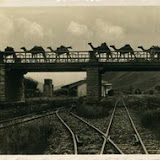
I wanted to post some images from this album, specifically those which I know are and those which I believe to be from the Middle East and Northern Africa, in this blog because of their beauty and hopefully to as a way to gain more information about the people and scenes they depict. My grandfather passed away more than a decade ago so unfortunately I cannot ask him for details myself. If you have any additional information regarding these photos, for instance anything regarding the culture, location, or content depicted, I would greatly appreciate it if you could comment on this entry or e-mail me.
You can view the photos in the slideshow in the left column of this blog, or visit:
 |
| Vintage Exotica |
Subscribe to:
Posts (Atom)